Close-range fights leave little time to recover from a mistake. A brief delay can give an opponent the chance to finish an engagement, while a well-timed decision can create room to reposition or return fire. In Call of Duty: Modern Warfare 4, Stim adds another consideration to these encounters. Players researching CoD MW4 DMZ Items may be familiar with recovery equipment, but Stim has a distinct role in Multiplayer. Its ability to initiate health regeneration, refresh Tactical Sprint, and mitigate flash and stun effects gives players more options when a firefight becomes difficult to control.
Stim Connects Recovery With Movement
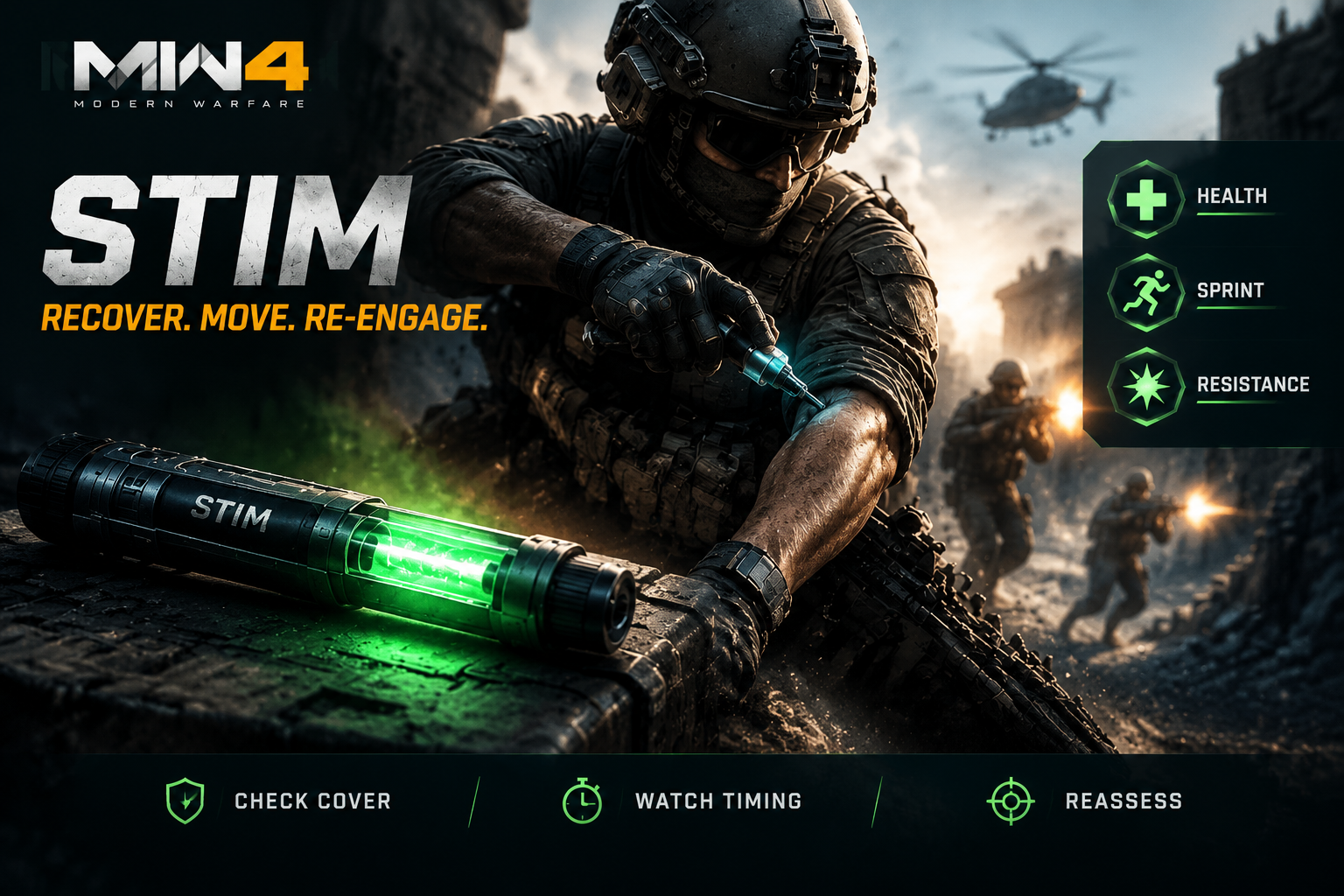
Stim combines immediate health regeneration with a Tactical Sprint refresh. These effects serve different purposes, but their value becomes particularly clear when a player needs to recover without losing the opportunity to move.
After taking damage, an operator may need to reach cover before attempting another engagement. Stim can support that transition by starting health regeneration and refreshing Tactical Sprint, potentially making it easier to leave an exposed position or change the angle of approach. Its effects do not guarantee a safe escape, but they can influence the options available during a brief opening.
Unlike equipment that primarily reveals enemies or disrupts their actions, Stim helps players respond to an evolving fight. Its effectiveness depends on the space available, the pressure opponents can maintain, and how quickly the player recognizes a suitable moment to act.
Why Timing Matters in Close-Range Fights
In close quarters, players often have to make several decisions within seconds. Weapon control, enemy positioning, available cover, and the possibility of another opponent all influence whether continuing the fight is worthwhile. Taking damage can change that calculation immediately.
Using Stim too early may leave less value for a later exchange, while delaying its use can reduce the opportunity to recover before incoming fire becomes overwhelming. Neither approach is always correct. The surrounding situation determines whether recovery, movement, or disengagement should take priority.
Several factors can influence the decision:
- Remaining health and the likelihood of taking additional damage.
- Distance to cover and the safety of the available route.
- Whether a Tactical Sprint refresh would help with repositioning or disengagement.
- The possibility of another opponent entering the fight.
- Whether preserving Stim would provide greater value in a subsequent encounter.
These considerations make MW4 Stim tactical equipment relevant to discussions about combat pacing. Its combined effects may allow a player to respond more actively after taking damage rather than automatically abandoning an aggressive position. However, pushing toward an opponent with a stronger angle or numerical advantage remains risky, even when Stim is available.
What Stim Can Offer During an Engagement
| Mechanic | Potential tactical benefit | Main limitation |
|---|---|---|
| Immediate health regeneration | Starts recovery after damage | Does not prevent further incoming fire |
| Tactical Sprint refresh | Creates another movement opportunity | Cannot make an exposed route safe |
| Flash and stun mitigation | Reduces the impact of disruptive effects | Does not eliminate every disadvantage |
| Tactical resource management | Adds another option when deciding how to respond | Poor timing can limit its usefulness |
Stim can change what a player is able to attempt during a fight, but it does not guarantee a favorable outcome. Accurate shooting, situational awareness, and sound positioning remain essential to winning an engagement.
Positioning Still Shapes the Outcome
Recovery equipment cannot compensate for every positioning mistake. Crossing an exposed corridor, entering a room without checking its angles, or pushing several opponents without support can leave a player vulnerable regardless of the selected tactical item.
Cover provides a better opportunity to reassess the situation. A nearby wall or doorway may offer enough protection to activate Stim and consider the next move. Attempting to recover while remaining in an opponent’s direct line of fire carries greater risk, especially when the enemy can continue firing without changing position.
The decision to attack again deserves the same care. Once health regeneration begins and Tactical Sprint becomes available, a player still needs to evaluate the opponent’s location and likely response. A refreshed sprint may support a new angle or a quick retreat, but rushing forward without checking the surrounding area can turn a potential advantage into another disadvantage.
Stim’s value comes from the decisions it supports. Recognizing when to disengage, when to reposition, and when to resume firing matters more than simply activating the equipment as soon as damage is taken.
What Could Shape Stim’s Role in Multiplayer?
Stim’s combination of recovery and mobility makes it relevant to discussions about tactical equipment balance. Its practical value depends on activation timing, available movement options, and the pressure opponents can maintain during an engagement. These factors influence whether the equipment is most useful for an aggressive push, an emergency retreat, or a change of position.
Progression also determines when players can access it. Stim unlocks at Player Level 47 in Multiplayer, placing it later in the main level progression rather than among the starting tactical options. However, its unlock requirement alone does not establish how effective it will be in actual matches.
Three considerations are especially useful when evaluating its role:
- Recovery: how much the immediate start of health regeneration helps during a contested encounter.
- Mobility: whether refreshing Tactical Sprint provides a meaningful opportunity to change position.
- Counterplay: whether opponents can still punish poor movement, predictable routes, and mistimed pushes.
These factors offer a more useful basis for evaluating Stim than assuming it will become essential to every loadout. Its effectiveness depends on the circumstances in which it is used and the alternatives available to the player. Claims about balance changes or its dominance in the current multiplayer environment should be supported by verified game data rather than speculation.
Stim’s Place in the Pace of Combat
Stim adds another layer of decision-making to close-range engagements by connecting health recovery with renewed movement. Its effects can help players respond after taking damage, but the benefit depends on whether enough time and space remain to use that opportunity effectively. The equipment is most interesting when considered as part of a broader combat decision rather than a guaranteed way to survive a difficult encounter.
The same attention to combat conditions matters when players explore different match environments. Those searching for CoD MW4 Bot Lobbies may have separate interests in match conditions, while Stim presents a more specific question about how tactical equipment affects individual encounters. Neither equipment choice nor the surrounding match environment removes the importance of positioning and timing. Ultimately, Stim provides additional flexibility, but turning that flexibility into an advantage still depends on reading the fight and choosing the right moment to move.